
Women's Hormone Therapy
Best HRT delivery methods compared: cream, patch, and pill
Compare estrogen patches, pills and creams for menopause: how each route works, what clot research shows, daily practicality and where progesterone fits.

Estrogen patches, pills and skin creams all treat hot flashes and night sweats, and at comparable doses they relieve those symptoms about equally well. They differ in how the hormone enters your body, daily practicality and a few safety details, especially blood clot risk. A low-dose vaginal cream is a different tool: it treats vaginal and urinary symptoms, not hot flashes.
Menopause is natural. That doesn't mean you have to push through symptoms that are wearing you down. The useful question is which route fits your symptoms, your health history and the way you actually live.
Reviewer: Nathan Parker, PharmD.
Start with what you want to feel different
A cream, patch and pill are not simply different packaging for the same care. Hot flashes and night sweats call for systemic treatment, meaning the hormone travels through your bloodstream. Vaginal dryness and pain with sex often respond to local vaginal treatment. Plenty of women need both, because local and systemic treatments do different jobs.
If you still have a uterus, systemic estrogen in any form needs a progestogen to protect the uterine lining.
HRT delivery methods at a glance
| Route | Treats | Day to day | What to weigh |
|---|---|---|---|
| Estrogen patch | Hot flashes, night sweats | Changed once or twice a week | Irritation, sticking; most studied skin route for clots |
| Estrogen pill | Hot flashes, night sweats | One pill a day | Passes through the liver first; higher clot risk than skin routes |
| Skin cream or gel | Hot flashes, night sweats | Measured daily application | Transfer to others; less research on compounded creams |
| Low-dose vaginal cream | Dryness, pain with sex | Vaginal, on a set schedule | Doesn't treat hot flashes; little reaches the bloodstream |
1. Estrogen patch: steady delivery without a daily step
A patch releases estradiol through the skin over several days, so there's no daily step. One estradiol patch label directs placing it on clean, dry skin of the lower abdomen or buttocks, never the breasts, rotating sites and avoiding the waistline. If one falls off, reapply it or use a new one and keep your schedule. If irritation or poor sticking bothers you, tell your pharmacist rather than quietly stopping.
The biggest reason a patch comes up is clot risk. In a UK study of more than 80,000 women with blood clots, oral HRT was linked with higher clot risk, while skin-applied estrogen, mostly patches, was not. NICE suggests considering transdermal rather than oral HRT for people at higher clot risk, including a BMI over 30. The study was observational and head-to-head trials are lacking: a reason to consider a patch, not a guarantee.
2. Estrogen pill: simple and familiar, with one tradeoff
A daily pill fits familiar routines, with nothing to stick on or rub in. The tradeoff is the route: swallowed estrogen passes through the liver first, and skin routes skip that step. In the same UK study, oral estradiol carried less clot risk than conjugated equine estrogen. Your clot, stroke and heart history belongs in this decision.
A pill is not automatically less effective because a patch avoids the liver. Without added clot risk, it can be a reasonable fit.
3. Skin creams and gels: flexible, with habits that matter
FDA-approved estradiol gels and sprays exist, and compounded creams can be made at a prescribed strength or combination. Apply the prescribed amount, let it dry, wash your hands and rotate sites. Labeling for an estradiol skin spray reports breast changes in children after contact with an application site, so cover the area when someone may touch it.
Compounded creams are prepared by a licensed pharmacy for your prescription, which makes room for a specific strength or combination, or for leaving out an ingredient you react to. If clot risk is part of your history, bring it up: most of the clot research comes from estradiol patches, so your prescriber may weigh a cream differently.
Bioidentical simply means the hormone matches what your body makes. Estradiol and progesterone are bioidentical whether they come in a patch, a pill or a compounded cream.
4. Low-dose vaginal cream: for symptoms a patch or pill may miss
Low-dose vaginal estrogen treats dryness, irritation and pain with sex where they happen, with little reaching the bloodstream. NICE recommends vaginal estrogen for these symptoms, including alongside systemic HRT. It won't treat hot flashes.
If hot flashes improve but sex still hurts, that deserves its own conversation, not automatically more systemic estrogen. See our comparison of vaginal dryness treatments. Low-dose vaginal estrogen generally doesn't need an added progestogen, so ask your pharmacist whether that applies to your formula and dose.
Where progesterone fits
With a uterus, estrogen alone can overstimulate the lining, and a progestogen at an adequate dose and schedule prevents that. When FDA removed heart disease, breast cancer and dementia statements from the boxed warning on hormone therapy labels, the warning about estrogen alone and the uterus stayed.
Oral micronized progesterone is a well-studied option. Its label covers protecting the lining in women taking estrogen and says to take it at bedtime, since it can cause drowsiness and dizziness. Ask how your plan protects the lining; over-the-counter progesterone creams and supplements aren't a substitute.
Where MintRx's women's hormone program fits
MintRx's women's hormone program is launching soon, and it is built around a pharmacist-led model. It starts with a real conversation: how you're sleeping, what's affecting you most, what you've tried and what you want to change. After labs, the pharmacist recommends a plan, and a licensed provider reviews it and decides whether to prescribe. The pharmacist stays involved through follow-up and periodic labs, working with your prescriber when something needs to change. The goal is someone in your corner, not just in your mailbox.
Treatment options built into the program:
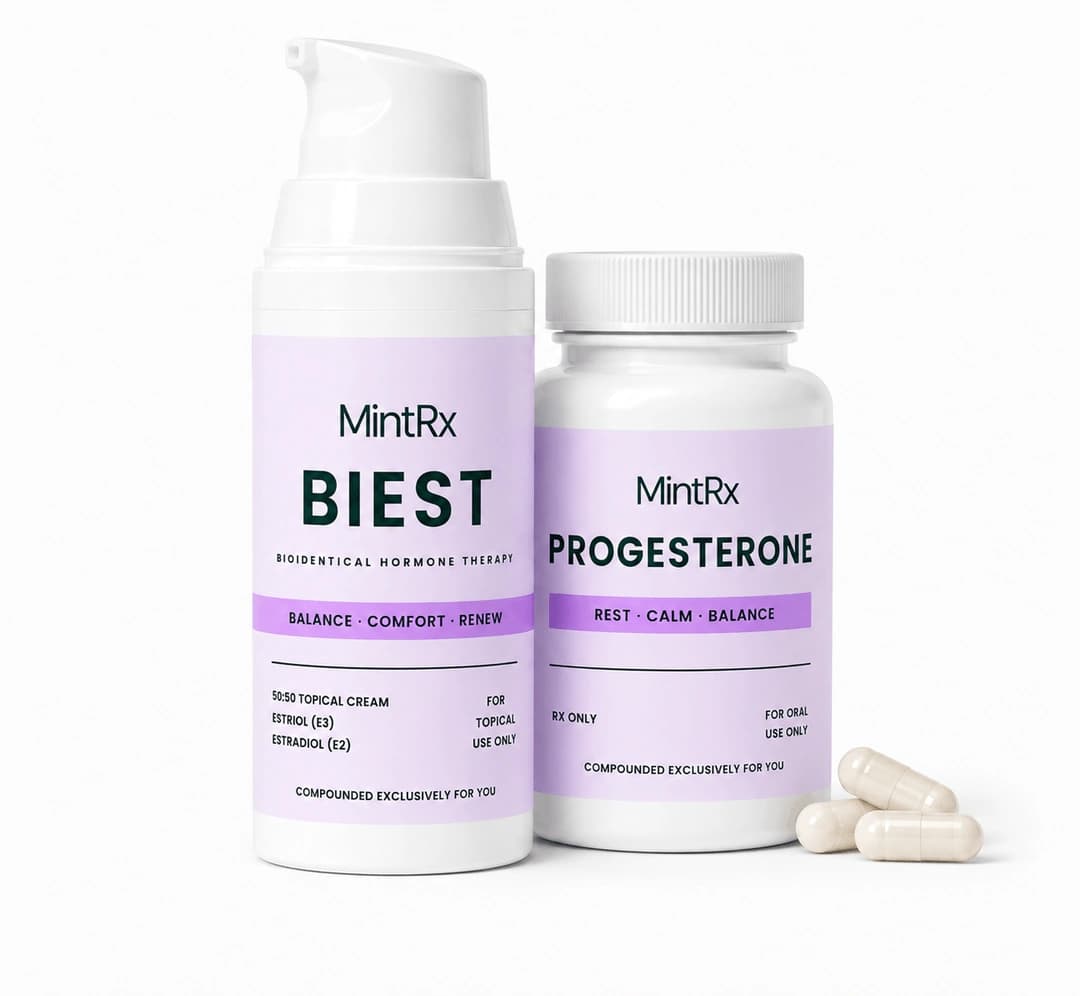
- Systemic estrogen as a compounded Bi-Est cream (estriol plus estradiol), or Bi-Est with a low dose of testosterone in the same cream
- Progesterone sustained-release capsules taken at bedtime
- Local vaginal creams added when symptoms call for them
The program doesn't use patches. If a patch or pill suits you better, that's a legitimate choice, not a lesser one.
Why cream and capsule? A cream lets the prescriber set a strength and combine hormones in one application. Most countries have no testosterone product approved for women. Its strongest research support is for low sexual desire after menopause, and in practice it's also used to help with energy, mood and muscle tone, where the evidence is still developing. A bedtime capsule suits progesterone's drowsiness. The point is fitting the treatment to you, then checking that it's working. Here's what good HRT follow-up should include.
Safety that matters more than cream versus patch
For most healthy women who start before age 60 or within 10 years of menopause, the benefits are more likely to outweigh the risks. The Office on Women's Health explains what changed.
Hormone therapy usually isn't recommended with unexplained vaginal bleeding, hormone receptor-positive breast cancer, liver disease, or a current or recent clot, stroke or heart attack. Bring your history, medicines and supplements to an online menopause evaluation.
Get urgent care for severe chest or leg pain, sudden shortness of breath, a sudden severe headache, or changes in vision or speech. Report new vaginal bleeding promptly instead of just switching routes.
FAQ
What's the best HRT delivery method?
The best route is the one that fits your symptoms and history. Patches, pills and skin creams treat hot flashes; low-dose vaginal estrogen treats local symptoms.
Is an HRT patch safer than an estrogen pill?
For blood clots, research favors skin routes: large observational studies link oral estrogen, not patches, with higher risk. Your own history matters most.
Do I need progesterone with an estrogen patch or cream?
If you have a uterus, yes. Systemic estrogen by any route needs an adequate progestogen to protect the lining.
Is a compounded hormone cream the same as an FDA-approved patch or gel?
They can contain the same hormones, but they're different products. A compounded cream is made for your prescription, and research on approved patches and gels doesn't automatically apply to it.
Can I switch from a pill to a patch or cream myself?
Talk with your prescriber first. Routes aren't interchangeable dose for dose, so switching needs a new plan.
Does MintRx offer estrogen patches?
Not in its women's hormone program, which is launching soon and uses estrogen cream with progesterone capsules. If a patch fits you better, discuss it with your prescriber.
The best route treats your actual symptoms, fits your history and is something you can keep using. You shouldn't have to figure that out alone. Ask what each medicine is for, how you'll know it's working and when you'll check in. Questions about which route fits you, or about the program? Talk with a MintRx pharmacist.
Sources
- The Menopause Society: 2022 Hormone Therapy Position Statement
- Vinogradova et al., BMJ: HRT and venous thromboembolism
- NICE NG23: Menopause recommendations
- DailyMed: Vivelle-Dot estradiol patch
- DailyMed: Evamist estradiol spray
- DailyMed: Prometrium progesterone
- Global Consensus Position Statement on Testosterone Therapy for Women
- ACOG: Hormone Therapy for Menopause
- FDA: Menopausal Hormone Therapy Labeling Changes
- Office on Women's Health: Hormone Therapy Safety


