
Care Guide
How are local and systemic options compared in online HRT?
Compare local and systemic online HRT by symptoms, hormone exposure, and risks. Learn what provider review covers and which questions to ask next.

Clinically reviewed by Nathan Parker, PharmD
Last reviewed: November 6, 2026
In online HRT, local and systemic treatments are compared by what you need help with. Low-dose vaginal estrogen targets menopause-related vaginal dryness, irritation and discomfort with sex. Systemic hormone therapy reaches the bloodstream to treat symptoms such as hot flashes and night sweats. Some women need one approach; others benefit from addressing both sets of symptoms.
Menopause is a natural transition. That doesn't mean you have to accept symptoms that are making daily life harder without exploring your options.
The useful question isn't simply, ‘Which hormone should I take?’ It's, ‘What are we trying to improve, and how will we know whether the plan is helping?’ That is where a thoughtful treatment plan and an ongoing pharmacist relationship come together.
Two different jobs, sometimes in the same plan.
| What you're comparing | Low-dose local vaginal estrogen | Systemic menopausal hormone therapy |
|---|---|---|
| Treatment goal | Menopause-related vaginal dryness, irritation and pain with sex | Hot flashes and night sweats; may also help vaginal symptoms |
| Where it acts | Mainly in vaginal tissues, with much lower bloodstream exposure at recommended low doses | Hormone reaches the bloodstream and acts beyond the application site |
| What it doesn't tell you | Local treatment is not a treatment for hot flashes | Improvement in hot flashes does not guarantee that vaginal discomfort is fully addressed |
| How the plan is chosen | Match the specific vaginal symptoms, examination or assessment needs, and prescribed formulation | Match symptoms, medical history, uterus status, treatment preferences and individual benefits and risks |
These are treatment categories, not instructions to swap one cream for another. The ingredient, strength, dose and application site all matter. Follow the directions for your own prescription.
A body cream intended to deliver estrogen through the skin can be systemic therapy. A low-dose vaginal estrogen preparation is intended to address local tissue symptoms. Similar packaging does not make them the same treatment.
Your hot flashes are better. Sex still hurts. Now what?
That is not automatically a reason to increase your systemic estrogen. It is a reason to tell your care team what has improved and what hasn't.
Vaginal dryness and discomfort can persist even when other menopause symptoms are responding. Local vaginal treatment can sometimes be used alongside systemic HRT when it is appropriate. Pain with sex can also have causes other than menopause-related dryness, so the next step starts with understanding the problem.
This is the kind of distinction a useful follow-up should catch. ‘Is your medication working?’ is only the beginning. Which symptoms are better? What is still getting in the way? Is using the medicine comfortable and manageable? Does something need a closer evaluation?
The answer may be targeted vaginal treatment, a change to the existing plan, help with how you're using it, or evaluation for another cause. It should not be an automatic increase in the same medication.
Where compounded options fit.
People do not all need the same hormone, the same strength or the same way of taking it. A useful plan accounts for those differences rather than asking everyone to fit the same prescription.
Bioidentical describes a hormone's molecular structure: it matches a hormone the body produces. It does not mean ‘compounded.’ FDA-approved bioidentical medicines exist too.
Compounding has a role when an appropriate manufactured product does not meet a patient's medical need. That might involve a needed strength or dosage form, or avoiding an inactive ingredient. The pharmacist and prescriber work together to identify the need and choose a suitable preparation.
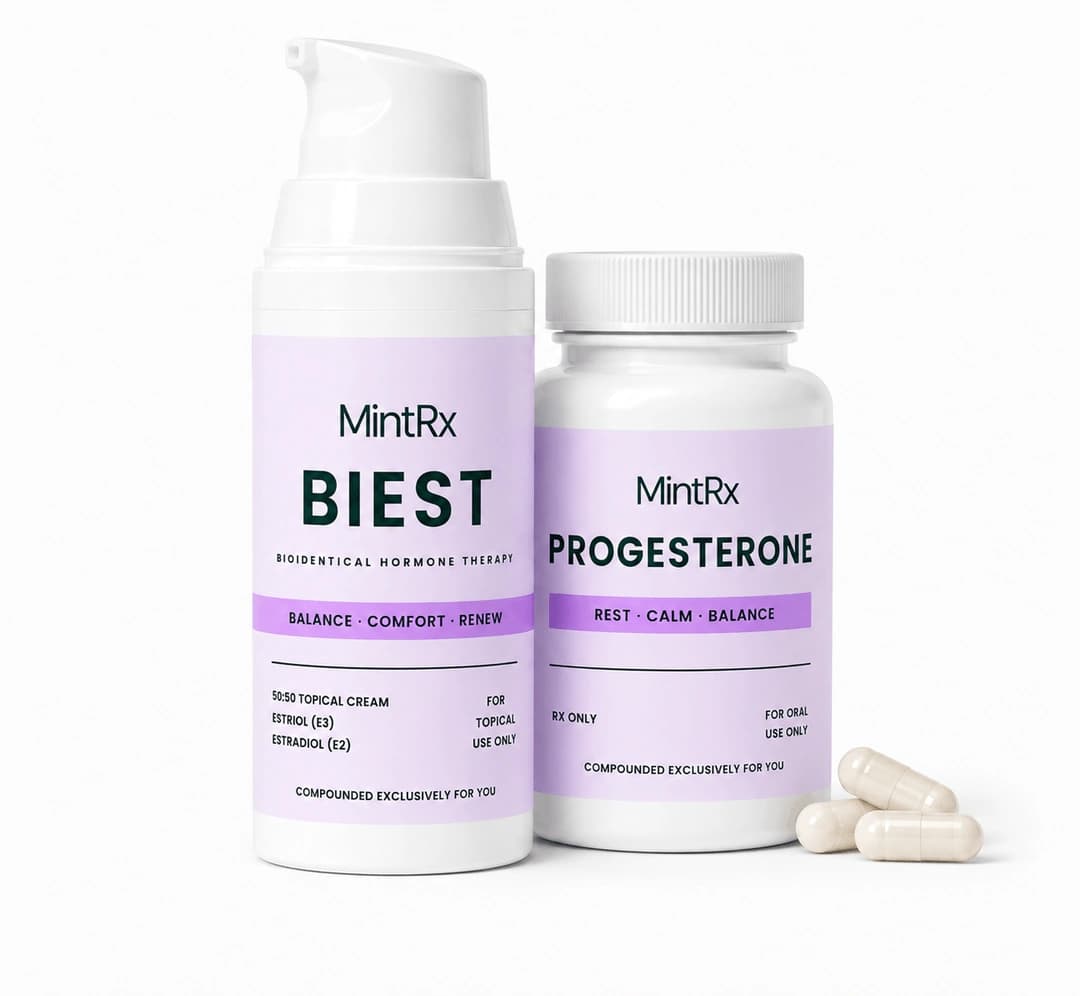
The Female HRT/TRT program we're building brings that flexibility into a continuing care relationship. Planned options include compounded Bi-Est, a combination of estriol and estradiol used as a systemic skin cream, progesterone when appropriate, and vaginal therapies for specific needs. These are different tools with different jobs, not a package everyone automatically receives.
Compounded medications are not FDA-approved. Customization does not establish that a preparation is safer or more effective than an approved medicine. The reason for choosing it should be specific to the patient.
The point is not simply to have more products available. It is to have a care team that can recognize when the current approach is not meeting your needs and work through the next step with you.
Follow-up should be more than ‘Ready for a refill?’
A good hormone conversation starts with you. How are you sleeping? What is affecting you most? What have you tried? What would feeling better let you do in an ordinary day?
You do not need to arrive with the right medical words or a perfectly organized list. You do need room to explain what is happening.
MintRx's new Female HRT/TRT program is designed around an initial pharmacist conversation, a review after program labs, and monthly pharmacist check-ins. The physician makes the prescribing decision. The pharmacist helps connect that decision to how treatment is actually going for you.
That means reviewing your medicines and supplements, explaining the prescribed formulation, checking how you're measuring and applying it, and helping you make sense of what has changed. It also means remembering the goal you started with instead of making every follow-up feel like a new intake.
If the plan needs reconsideration, the pharmacist works with your prescriber. Sometimes that means an adjustment or an additional treatment. Sometimes it means investigating another cause. Sometimes it means explaining why keeping the plan steady makes more sense than changing it again.
The program's planned care cycle includes repeat labs and review before the next 90-day fill, with earlier evaluation when needed. Lab results are part of the picture, not a replacement for your symptoms, history or judgment about how treatment is fitting into your life.
You should know what happens after treatment starts, who owns your next step, and how to reach someone before a small question becomes a reason to give up.
What needs to be part of the decision?
The right plan considers your medical history as well as your symptoms. Tell the care team about unexplained vaginal bleeding, a history of hormone-sensitive cancer, blood clots, stroke, heart attack or liver disease. A history of breast cancer calls for an individualized discussion that may involve your cancer specialist.
If you have a uterus and use systemic estrogen, the plan generally needs adequate progesterone or another appropriate progestogen to protect the uterine lining. Low-dose local vaginal estrogen generally does not require an added progestogen, but that guidance does not apply automatically to every compounded vaginal formula or dose.
Report new or unexpected vaginal bleeding promptly. Do not assume it is something to ignore because you are using hormones. Severe symptoms such as chest pain, sudden shortness of breath or signs of stroke need emergency care, not a routine pharmacist appointment.
Hormone testing is not routinely needed to identify menopause in otherwise healthy people aged 45 or older with typical symptoms. Testing within a treatment program answers a different, patient-specific question. Your team should explain what each test is intended to clarify.
FAQ
Can I need both local and systemic treatment?
Yes. They address different treatment goals and may be used together when appropriate. Tell your team which symptoms remain rather than assuming that every unresolved symptom requires more systemic hormone.
Does a compounded cream only work where I put it?
No. A prescribed skin cream can be intended for systemic hormone delivery. The formulation, dose and application site determine its intended role. Use it only as directed; do not move a body cream to a vaginal application site or vice versa.
What should I bring to the first conversation?
Bring your current medication and supplement list, details of previous hormone treatment, and the symptoms you most want help with. Include what helped, what did not, and practical problems with using treatment. You do not need to decide on a prescription before the conversation.
Local versus systemic HRT is not a contest between stronger and weaker treatment. It is a question of matching the treatment to the problem and staying involved long enough to understand how it is going.
If you're unsure what your current treatment is meant to do, or what the next step could be, talk with a MintRx pharmacist. You can also read when to call the pharmacy team for help with medication questions and care coordination.
You should not have to figure out hormone care alone.


