

Is topical minoxidil with finasteride FDA-approved?
Minoxidil finasteride topical combinations are not FDA-approved. Compare oral and topical options, understand key risks, and prepare for a provider review.
No. There is no FDA-approved topical finasteride product in the United States, either by itself or combined with minoxidil. Approved topical minoxidil products and oral finasteride tablets exist, but their approval does not carry over to a compounded scalp formula. The FDA's topical-finasteride safety alert makes that distinction explicit.
That answers the approval question. The next useful question is what evidence and precautions apply to the exact product you're considering.
Clinically reviewed by Nathan Parker, PharmD. Last reviewed: November 6, 2026.
A topical minoxidil-finasteride combination is not FDA-approved in the United States.
Research on one formula does not establish the results or risks of a different concentration, foam or spray.
Topical finasteride can reach the bloodstream and can transfer to another person.
Ask what is in your prescription, why that formula was chosen and how to use it around other people.
Which hair-loss products are approved?
The distinction is the finished medicine, not simply whether you recognize its ingredients.
ProductU.S. FDA statusWhat that means for youTopical minoxidil aloneFDA-approved products are available for specific pattern hair-loss uses.Use the exact product's label. The intended users, directions and precautions can differ.Finasteride 1 mg tabletsApproved for male pattern hair loss in men.This is an oral treatment. Its approval does not cover finasteride applied to the scalp.Compounded topical minoxidil plus finasterideNot FDA-approved.The finished formula has not undergone FDA premarket review for safety, effectiveness and quality.Oral minoxidil tabletsApproved for certain severe hypertension cases, not hair loss.Hair-loss prescribing is off-label. The tablets carry a boxed warning for serious cardiovascular risks.
The Propecia prescribing information describes the approved oral finasteride use. The oral-minoxidil prescribing information describes its hypertension indication and boxed warning. Neither label establishes approval of a compounded scalp mixture.
The strengths above identify formulations; they are not instructions for what you should take. An oral tablet and a scalp preparation are not interchangeable.
Approved, off-label and compounded aren't the same thing
'Prescription' tells you a prescriber is involved. It does not tell you whether the finished medicine is FDA-approved.
FDA-approved: The FDA has reviewed a particular product for its approved uses. That doesn't mean it has no side effects or is right for everyone.
Off-label: An approved medicine is prescribed outside its approved labeling. Oral minoxidil prescribed for hair loss is one example. The FDA explains how off-label prescribing works.
Compounded: A pharmacy or other authorized clinician prepares a medicine to meet a medical need. Compounding can help when an approved product does not meet that need, but the finished preparation is not FDA-approved. FDA's compounding guidance explains this distinction. A compounded formula is also not the same as an FDA-approved generic.
For you, the useful question is: 'What need does this particular formula address that an approved option would not?'
Does 'not FDA-approved' mean there is no research?
No. Research and FDA approval answer different questions. In a 24-week randomized trial in adult men with pattern hair loss, a specific 0.25% finasteride spray improved hair counts in the measured scalp area more than placebo. Blood levels of finasteride were lower than with the oral comparison treatment, but the topical treatment still reduced DHT levels in the blood.
That study tested finasteride alone in a particular spray, not a minoxidil-finasteride combination or every compounded foam. It helps explain the interest in topical treatment. It does not establish FDA approval, eliminate systemic risks or prove that another formula will perform the same way.
What does this mean for a MintRx formula?
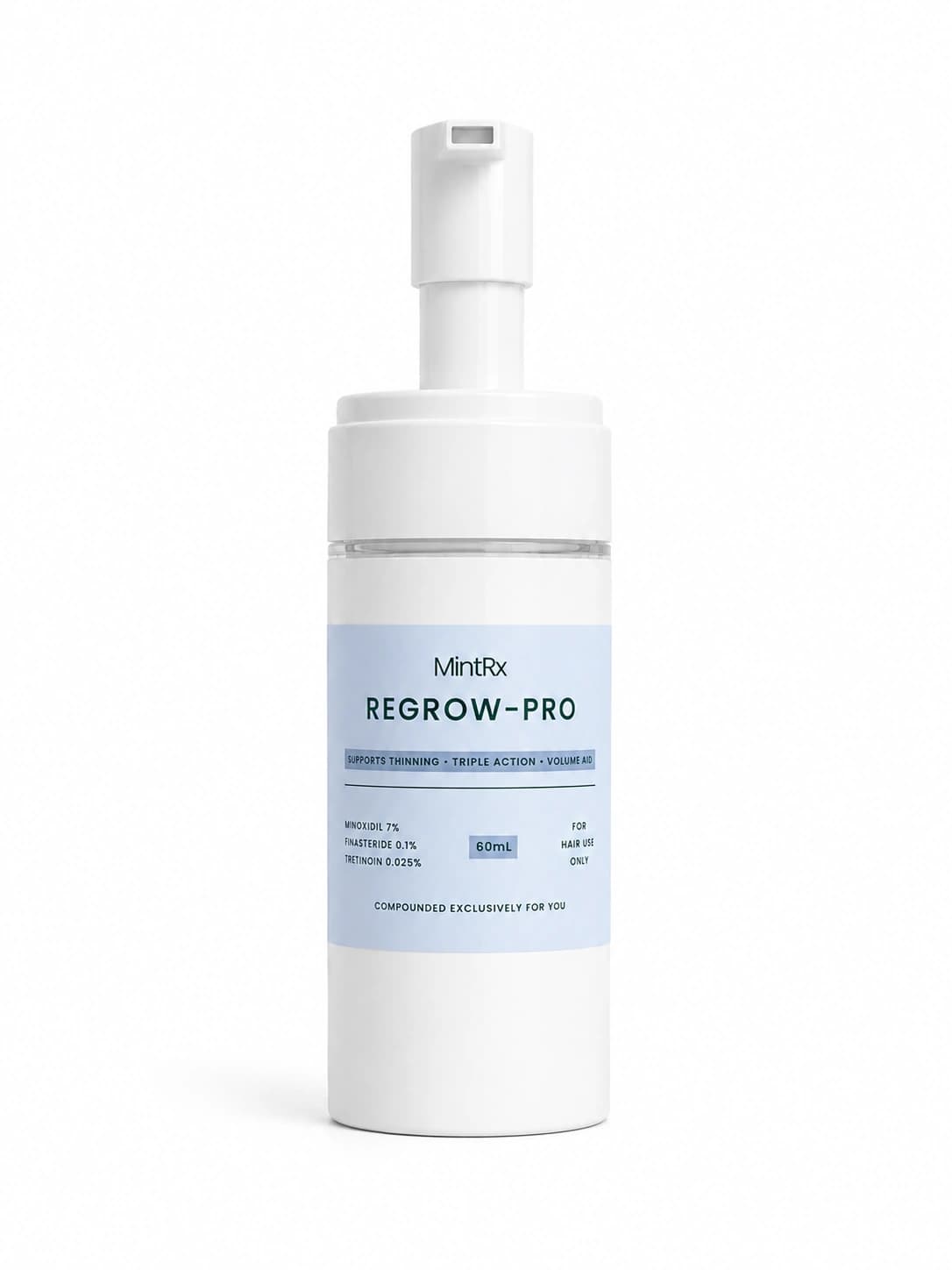
MintRx's RegrowPro compounded foam contains minoxidil 7%, finasteride 0.1% and tretinoin 0.025%. That makes it different from plain over-the-counter minoxidil and from the finasteride-only spray studied above. It is not FDA-approved.
The ingredient list tells you what's in the bottle. It doesn't tell you that three ingredients work better than one, or that a higher percentage is a better fit. Ask why each ingredient is included and what evidence applies to the formula you would receive.
Topical minoxidil alone: an approved option with limits
Even the same percentage doesn't tell you the whole story. The Men's Rogaine 5% foam label and Women's Rogaine 5% foam label have different directions. Check the exact product rather than borrowing instructions from another bottle or assuming all 5% products are used the same way.
The benefit is treatment of the pattern hair loss described in the relevant label. Results vary, continued use is needed to maintain regrowth, and scalp irritation or unwanted hair growth outside the intended area can occur.
If you have heart disease, ask your clinician before starting topical minoxidil. Its labels say to stop use and seek medical advice for symptoms such as rapid heartbeat, dizziness, unexplained weight gain or swelling. Chest pain or fainting needs urgent medical attention.
Sudden, patchy, unexplained hair loss or an inflamed scalp needs assessment rather than an assumption that a regrowth product is appropriate.
Oral finasteride: approval does not extend to scalp mixtures
Finasteride 1 mg tablets are FDA-approved for male pattern hair loss in men. Finasteride reduces the formation of dihydrotestosterone, or DHT, a hormone involved in this type of hair loss.
Its prescribing information includes sexual adverse effects such as decreased libido, erectile dysfunction, and ejaculation disorders. Postmarketing labeling also includes reports of sexual dysfunction continuing after discontinuation. Those reports do not predict an individual patient's experience, but they belong in a treatment discussion.
Pregnancy precautions are particularly important. People who are pregnant or could become pregnant should not handle crushed or broken finasteride tablets because of the potential risk to a male fetus.
What does 'topical' change about the precautions?
Putting a medicine on your scalp doesn't guarantee it stays there. The FDA's April 22, 2025 alert warns that topical finasteride can enter the bloodstream. Reported problems included sexual symptoms and mood changes; some reports described symptoms continuing after treatment stopped. These reports cannot tell us how often a problem occurs or prove the medicine caused every reported symptom.
There is also a household consideration: the applied product can transfer to someone else. People who are pregnant or could become pregnant should avoid exposure to finasteride because of the potential risk to a male fetus. Ask the dispensing pharmacist for the exact instructions for applying your product, washing your hands and preventing contact with treated skin or residue. Don't borrow a drying-time rule from a different formula.
Contact your prescriber promptly about new sexual symptoms or mood changes. Seek immediate help for thoughts of self-harm rather than waiting for a routine message response.
What should you ask before filling the prescription?
Bring the product name and ingredient list, not just the phrase 'hair-loss spray.' These questions make the conversation more useful:
What's in it? Confirm every active ingredient, its concentration and whether you will receive a foam, spray or solution.
Why this formula? Ask what need it addresses and whether an approved option could meet that need.
What was actually studied? Was it this combination, or a different strength, route or single ingredient?
How will it fit my household? Ask about pregnancy precautions, accidental transfer and exactly how to apply and handle it.
What is the follow-up plan? Agree on how to assess progress and who to contact about side effects.
Also share what you've already tried, your other medicines and supplements, any heart or blood-pressure problems, pregnancy considerations and previous reactions to hair-loss treatment. Those details help turn a product comparison into a treatment discussion.
What happens when you explore treatment online?
You don't have to decode the ingredient list alone. Talk with a MintRx pharmacist about the formula, directions and medication concerns. A licensed provider decides whether prescription treatment is appropriate and whether the plan should change. Submitting an intake does not guarantee a prescription.
Our guide to what happens after you start treatment online explains provider review, pharmacy fulfillment and ongoing support.
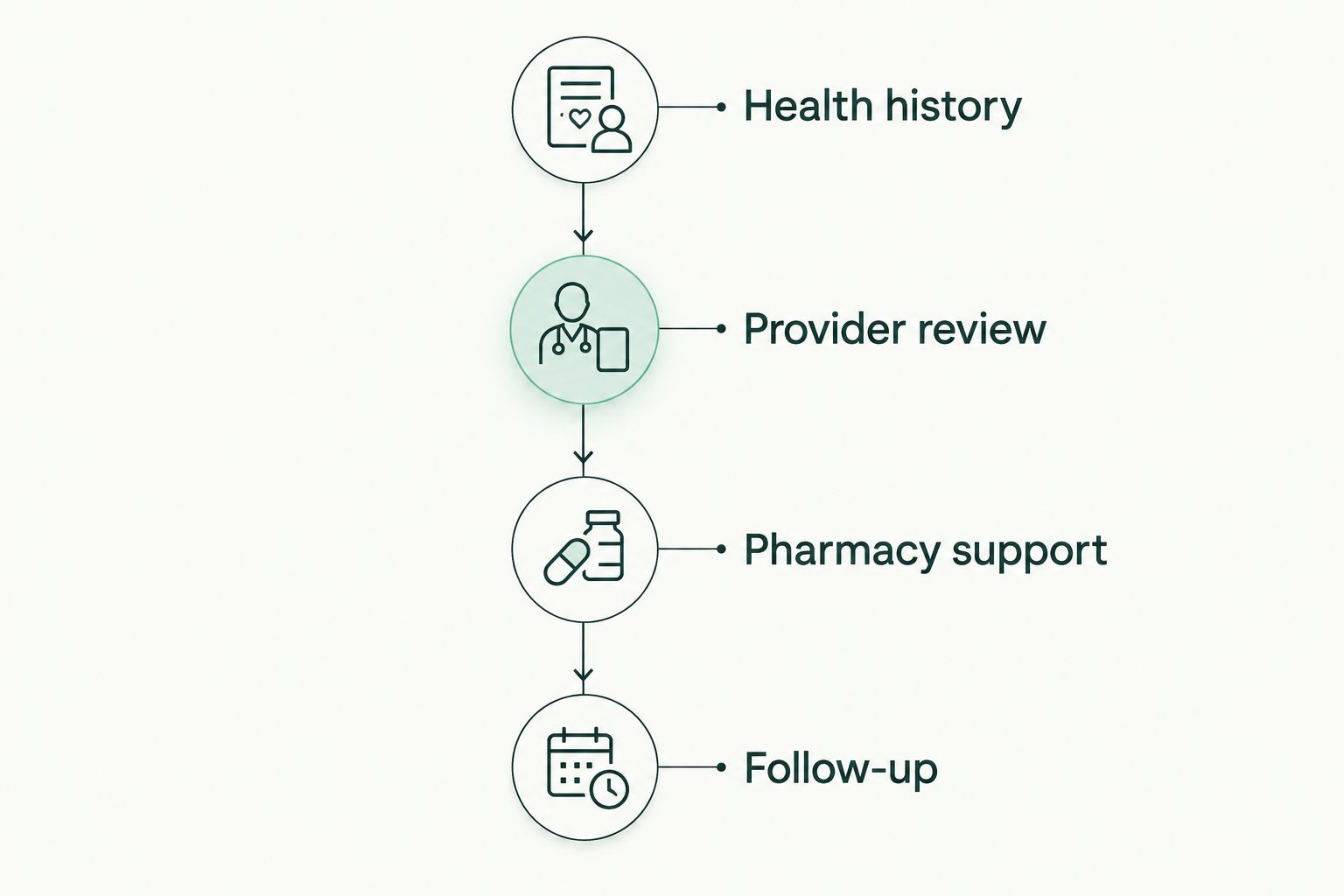
Prescribing decisions and medication support are separate parts of the care process.
FAQ
Is a minoxidil finasteride topical combination FDA-approved?
No. There is no FDA-approved topical finasteride product in the United States, either alone or combined with minoxidil. Approval of separate minoxidil or oral finasteride products does not extend to a compounded scalp preparation.
What's the difference between compounded and off-label treatment?
A compounded preparation is not FDA-approved. Off-label use means an FDA-approved medicine is prescribed outside its approved labeling.
Can topical finasteride cause effects elsewhere in the body?
Yes. Topical finasteride can enter the bloodstream. Applying it to your scalp does not eliminate systemic risks or precautions against transfer to another person.
Is oral minoxidil FDA-approved for hair loss?
No. Oral minoxidil is approved for certain severe hypertension cases, not hair loss. Hair-loss prescribing is off-label, and the tablets carry a boxed warning for serious cardiovascular risks.
Does a stronger topical formula mean better hair growth?
A higher concentration alone does not establish better results or greater safety. Evidence needs to match the formulation, and a licensed provider should assess whether it is appropriate for you.
Can I use someone else's topical hair loss prescription?
Do not use someone else's prescription. The formulation and precautions need to match your medical history, and topical finasteride also presents accidental-transfer concerns.
Who answers medication questions after treatment is prescribed?
Your pharmacist can explain medication directions, handling and side-effect questions. Your licensed provider makes prescribing and treatment-change decisions. See when to call the MintRx pharmacy team for help choosing the right contact. Client Care handles orders and account questions, not prescribing.
Ask about the bottle, not just the ingredient. Knowing the exact formula, the evidence behind it and the precautions that fit your life is more useful than assuming 'prescription' means approved or 'topical' means risk-free.
Explore MintRx's hair-loss options, then bring your questions to the care team before choosing a prescription.
Contact the care team: For account and order help. Use the secure care path, not the public contact form, for sensitive medical details.
Sources
FDA: Compounded topical finasteride safety alert, April 22, 2025.
FDA: Compounding and the FDA, Questions and Answers.
FDA: Understanding Unapproved Use of Approved Drugs, Off Label.
Piraccini and colleagues: Topical finasteride phase III randomized trial, 2022. Published correction.
DailyMed: Propecia prescribing information.
DailyMed: Minoxidil tablets prescribing information.
DailyMed: Men's Rogaine 5% foam Drug Facts.
DailyMed: Women's Rogaine 5% foam Drug Facts.
Keep reading
Need help with your next step?
Start with Client Care. We can help with account and order questions or route you to the right clinical or pharmacy resource.