
Hair Loss
Postpartum hair loss: what helps and when to get checked
Finding handfuls of hair after having a baby? Learn when shedding usually eases, what you can do on wash day, and which changes deserve a scalp exam.

If you're a few months out from having your baby and a handful of hair comes away in the shower, it's fair to wonder how much more you can lose. If it's coming from all over and your scalp feels like it usually does, that fits a common kind of postpartum shedding. It usually settles on its own. You don't need to buy a hair treatment today.
Reviewer: Nathan Parker, PharmD.
Why now, months after delivery?
During pregnancy, more hairs than usual stay in the growing phase. After delivery, estrogen drops and many of those hairs take their resting break at the same time. They don't fall out right away. That's why a brush that looked ordinary at your six-week checkup can look completely different a couple of months later. Your clinician may call this telogen effluvium.
According to the American Academy of Dermatology's guide for new moms, shedding usually peaks around four months after birth. Most women have their usual fullness back by their baby's first birthday, many sooner. Less hair in the brush and a ponytail that feels thick again are two different milestones. The first can come well before the second.
What helps on wash day?
Use the shampoo you already like. Work conditioner through the ends and ease knots apart instead of pulling a brush through them. If you wear your hair up to keep little hands out of it, try a looser tie that doesn't tug at your temples. That helps protect the hair you have from breaking. It won't stop the hairs that are already ready to shed. If you'd like more lift, a volumizing shampoo can make hair look fuller while it grows back.
Here's what I'd keep instead of a hair count: take one photo of your usual part in daylight, and note the month you gave birth and when the shedding started. If it's still on your mind next month, take the same picture in the same spot with your hair dry. You'll have something useful to compare without having to inspect the drain every morning.
When I'd ask someone to look at your scalp
Look at where you're losing hair, not just how much came out today. A part that keeps getting wider, especially if it was changing before pregnancy, can point to female pattern hair loss rather than shedding alone. The two can happen together. If your clinician finds pattern loss, our guide to hair loss treatment for women is about that separate decision.
Ask your OB, primary care clinician or dermatologist for an exam sooner if you see a smooth bald patch, notice redness, pain or persistent scaling, or the thinning keeps getting worse. Mention heavy blood loss around delivery, a recent illness or a change in medicines. If your hair hasn't regained its usual fullness by your baby's first birthday, make an appointment even if your scalp feels fine. If it's worrying you now, you can ask now.
Before you try a medicine or a hair gummy
If you're holding a box of women's 5% minoxidil foam, check the Drug Facts for that foam. It says not to use it for hair loss associated with childbirth and warns it may be harmful during pregnancy or breastfeeding. Leave it on the shelf for ordinary postpartum shedding.
If a clinician finds a different cause and suggests minoxidil while you're nursing, ask whether they mean a scalp product or a tablet. LactMed's breastfeeding guidance for minoxidil considers topical minoxidil acceptable once breastfeeding is established, but your baby's skin should not touch treated skin. It advises caution with oral minoxidil, especially when nursing a newborn. That guidance helps you and your clinician weigh a treatment for a diagnosis; it isn't a reason to start it yourself.
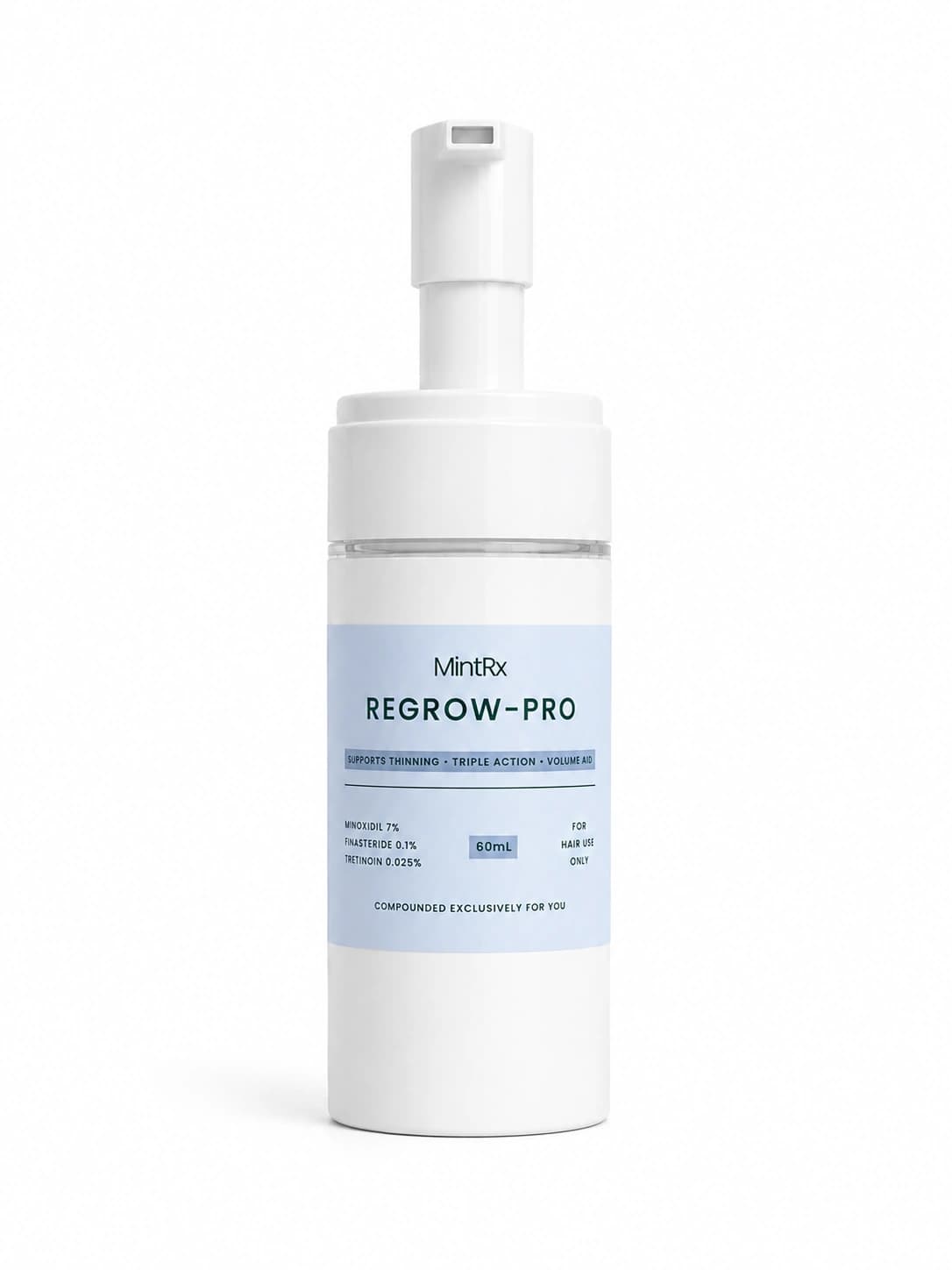
If you're pregnant again or trying to conceive, tell your clinician before starting or restarting a hair medicine. Avoid finasteride during pregnancy, including scalp preparations. MotherToBaby's finasteride fact sheet also notes that finasteride use while breastfeeding hasn't been studied. A combination spray isn't the same as minoxidil alone.
Skip the extra hair gummies or iron unless your clinician identifies a need. The dermatology guidance on hair supplements recommends biotin, iron or zinc for a documented deficiency, not for every person who's shedding. That's about adding a hair supplement, not stopping a prenatal vitamin or iron you've been told to take.
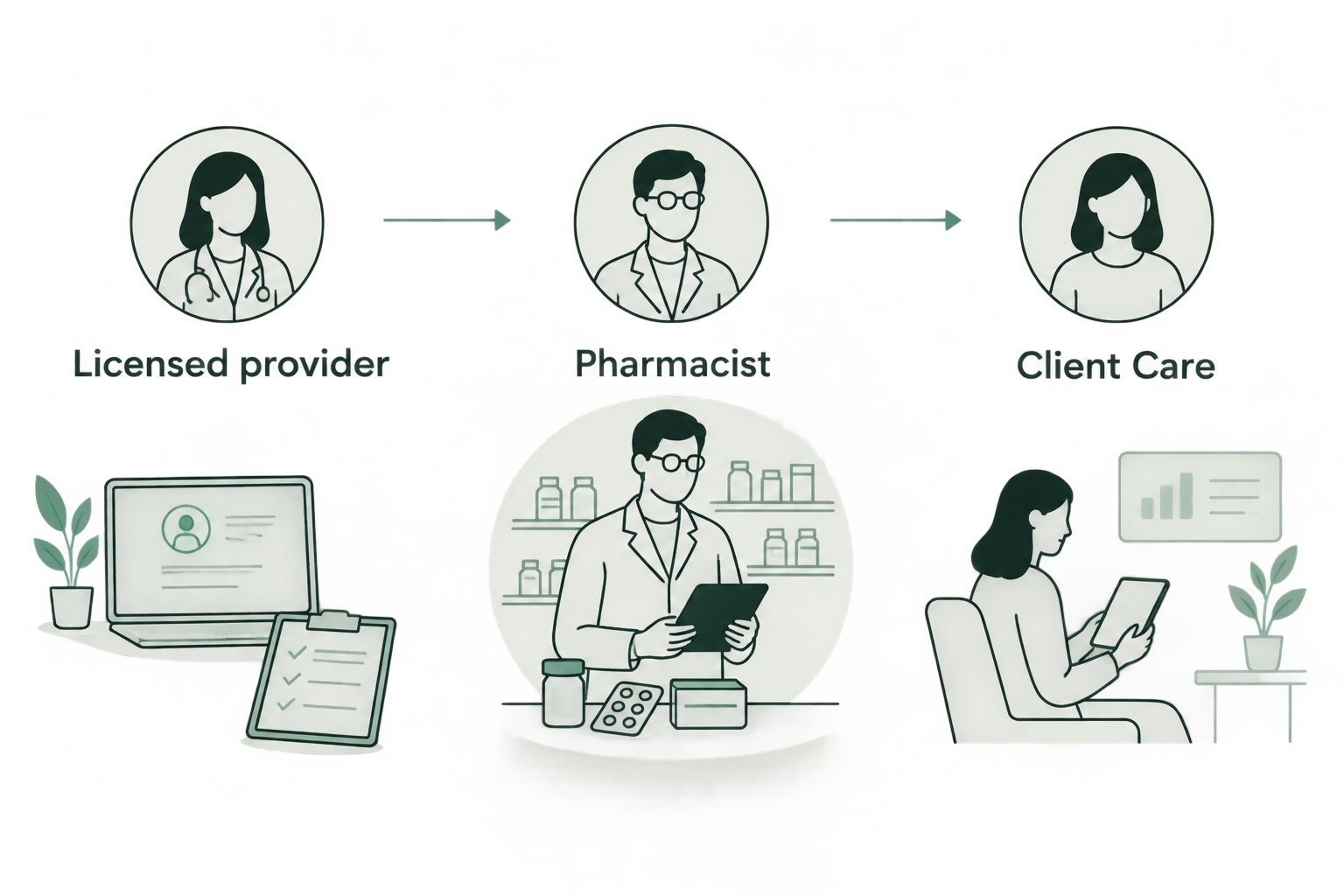
If you're considering a product, keep the box handy. During care hours, call or text MintRx at 866-855-6468 to reach a pharmacist in minutes. Read us the active ingredients and tell us if you're nursing or trying for another baby. We can help you figure out what the label means and what to ask your prescriber. If another time works better, you can schedule a pharmacist call.
Frequently asked questions
Do I need to cut my hair short?
Only if you want to. A shorter style can give fine hair more volume or make it easier to manage. You can keep your length and let the shedding run its course.
What are the short hairs sticking up along my forehead?
A fringe of short new hairs can show up as hair starts to grow back. The ends may stick up for a while because they aren't long enough to lie down with the rest of your hair.
Do I need blood tests before my appointment?
You can start with the visit. Your clinician can look at your scalp and hear your history first, then decide whether a test for iron deficiency or a thyroid problem would help explain the shedding.
Sources
Hair loss in new moms: Dermatologist tips · Telogen effluvium: British Association of Dermatologists patient leaflet · Minoxidil: Drugs and Lactation Database


