
Care Guide
Can women get prescription hair loss treatment online?
Yes, when a licensed provider finds it fits. What women should know about causes, minoxidil, finasteride limits, pregnancy and when to be seen in person.

Yes. Women can get prescription hair loss treatment online when a licensed provider reviews your history and decides a prescription fits. An online visit still has to answer the same first question an office visit would: what's actually causing your hair loss? A widening part, heavy shedding a few months after having a baby and a patchy bald spot can all send you to the same search, but they don't call for the same plan.
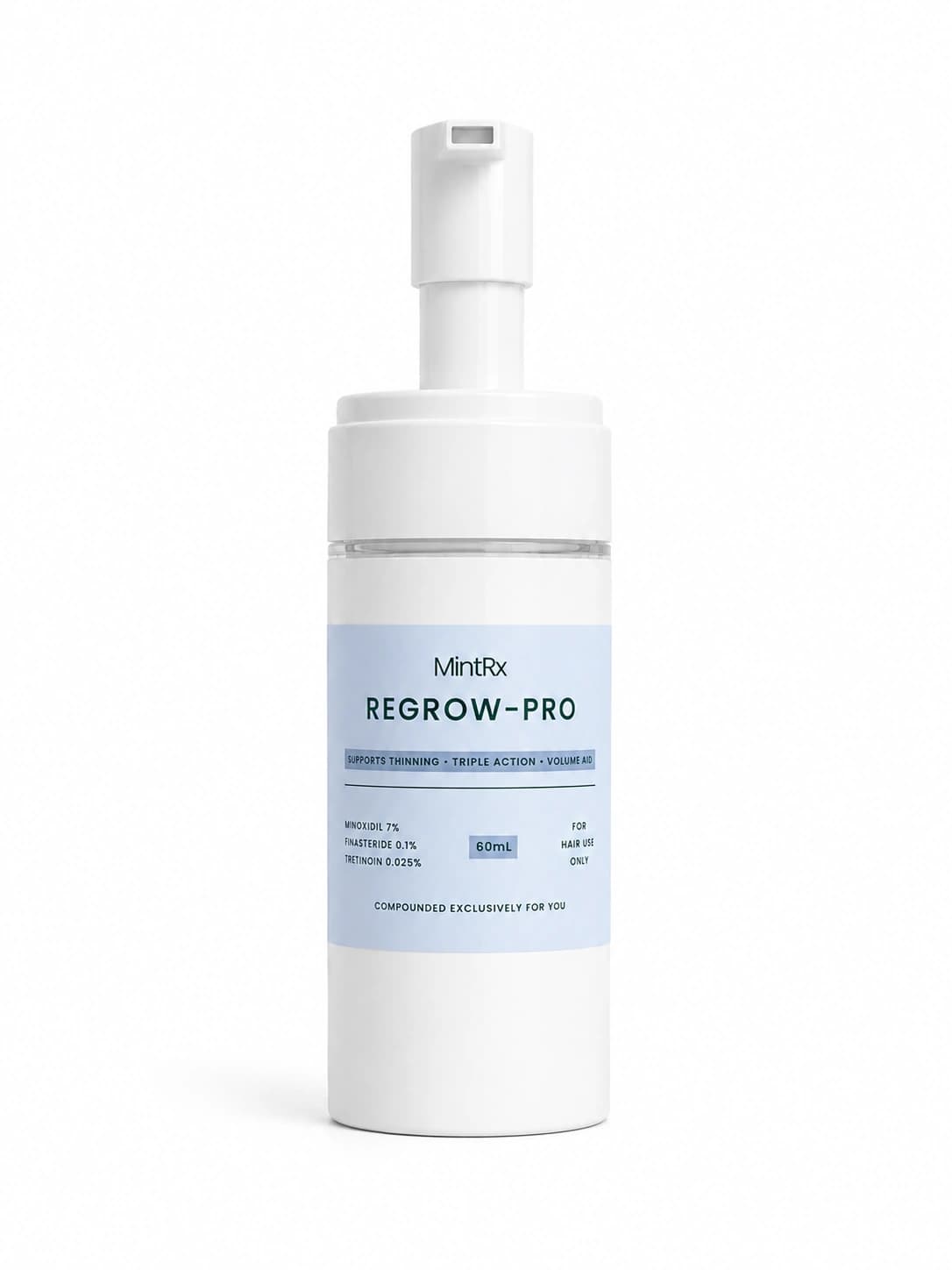
At MintRx, the prescription options for women are oral minoxidil and, for women who can no longer become pregnant and aren't pregnant or trying to conceive, finasteride tablets and RegrowPro, a compounded foam with minoxidil, finasteride and tretinoin. Which one fits depends on the cause of your hair loss, your heart and blood pressure history, whether pregnancy is possible, breastfeeding and what you've already tried. A provider may also decide an in-person scalp exam is the better next step. That's a useful answer, not a failed visit.
Reviewer: Nathan Parker, PharmD.
Can women get prescription hair loss treatment online?
Yes, but online prescribing is an option, not a guarantee. A provider reviews your symptoms, history and medicines, and may recommend testing or an in-person visit instead of a prescription.
A useful evaluation follows this sequence:
- Describe the change. Explain when thinning or shedding began, where it occurs, and whether your scalp itches, hurts, or looks inflamed.
- Share your history. Include recent illness, childbirth, weight changes, medications, supplements, and previous hair loss treatments.
- Complete the assessment. Provide photographs or other information requested by the provider. Additional evaluation depends on what the assessment shows.
- Discuss the plan. Ask about the suspected cause, treatment benefits, meaningful risks, and whether the proposed use is FDA-approved or off-label.
- Arrange follow-up. Understand how to ask medication questions and when to contact the prescribing provider about progress or side effects.
If you've recently had a baby, recovered from a major illness or surgery, or lost a lot of weight, say so up front. The American Academy of Dermatology notes that hair can regrow on its own after events like these, which changes whether you need a medicine at all.
Off-label means an FDA-approved medicine is being prescribed for a use that the FDA has not approved. It does not mean that all uses, doses, or formulations have the same evidence.
Which hair loss treatments should women discuss with a provider?
For female pattern hair loss, the main options are a scalp treatment you can buy without a prescription and a few prescription medicines, each with different trade-offs. The AAD's female pattern hair loss guide is a good plain-English overview.
| Option | Why it may come up | What to weigh |
|---|---|---|
| Topical minoxidil (no prescription) | FDA-approved 2% and 5% products for women; the AAD's most-recommended treatment | Daily application, scalp irritation, unwanted facial hair; avoid in pregnancy and breastfeeding |
| Oral minoxidil (prescription, off-label) | A scalp-free option when topical use is hard to keep up | Boxed heart warning, fluid retention, faster heartbeat, unwanted hair growth; not for pregnancy or breastfeeding |
| Finasteride tablets (prescription, off-label for women) | An option for women who can't become pregnant and aren't pregnant or trying | Not for anyone who is or may become pregnant; evidence in women is more limited than in men |
| RegrowPro compounded foam (prescription) | Combines minoxidil, finasteride and tretinoin in one scalp foam, for women who can't become pregnant | Not FDA-approved; scalp irritation; can transfer to others, so handling precautions matter |
| Spironolactone (prescription, off-label) | Can help some women with pattern hair loss | Must not become pregnant while taking it; kidney health, potassium and other medicines matter |
| Treating another cause | Shedding, inflammation or scalp disease rather than pattern loss | May need an exam, lab work or a dermatologist |
Keep the route clear: a scalp product and a tablet are different treatments, even when both contain minoxidil. Our guide to choosing a prescription hair loss treatment walks through how these options differ.
Topical minoxidil: an option that does not require a prescription
The AAD calls topical minoxidil the most-recommended treatment for female pattern hair loss, and you don't need a prescription. Products with 2% or 5% minoxidil are approved for women. Read the exact label. The Women's Rogaine 5% foam Drug Facts, for example, is used once daily and says not to use it if your hair loss is sudden or patchy, is associated with childbirth, or you don't know the cause. It says results may take 3 to 6 months and that it may be harmful during pregnancy or breastfeeding.
The trade-offs are daily application, possible scalp irritation, unwanted facial hair, and the need to keep using it to keep the benefit.
Oral minoxidil: prescription treatment with different risks
Oral minoxidil tablets are FDA-approved for severe high blood pressure, not hair loss, so using them for hair loss is off-label. Off-label isn't the same as unstudied. In a multicenter study of 1,404 people treated with low-dose oral minoxidil for hair loss, about two-thirds of them women, unwanted hair growth was the most common side effect, while lightheadedness, fluid retention and a fast heartbeat were less common. That was a look back at patient records without a comparison group, across a range of doses, so it can't tell you how you'll do on a specific dose.
The tablet still carries a boxed warning for serious heart-related effects, including fluid around the heart and worsening chest pain. Tell your provider about heart conditions, blood pressure, kidney disease and swelling. Seek urgent care for chest pain, trouble breathing or fainting, and contact your prescriber promptly about new swelling, quick weight gain or a racing heartbeat.
Two things deserve an honest conversation before you start, not after. Unwanted hair growth on the face or body is common enough to plan for. And the label says oral minoxidil should not be given while breastfeeding; MintRx's oral minoxidil page also says not to use it during pregnancy.
Spironolactone: a prescription option for selected women
Spironolactone blocks some effects of androgens, hormones that can contribute to female pattern hair loss. AAD guidance describes its use in women, but the FDA has not approved it specifically for hair loss.
A provider must consider pregnancy potential, kidney health, potassium levels, blood pressure, and interacting medicines. Testing and monitoring depend on that assessment. Do not start, stop, or change spironolactone based on general hair loss advice.
The AAD notes it's essential not to become pregnant while taking it. Spironolactone isn't one of the hair-loss medicines MintRx lists, so this is a conversation for your dermatologist or primary clinician.
Finasteride needs a clear answer too. The Propecia prescribing information says it must not be used by anyone who is or may become pregnant, because it can affect the development of a male fetus, and it isn't FDA-approved for women. That's why MintRx considers finasteride and RegrowPro only for women who can no longer become pregnant, such as after menopause, and who aren't pregnant or trying to conceive. Evidence in women is more limited and mixed than in men, so give it the same 6 to 12 months and a clear check-in plan.
If someone in your home uses finasteride, the precaution reaches you too. If you're pregnant or could be, don't handle crushed or broken tablets, and avoid contact with scalp treated with a topical finasteride product, which FDA warns can transfer to others.
Why the treatment recommendation varies
There is no single prescription that fits every woman with thinning hair. The main decision factors are:
- The pattern and timing. Gradual thinning, sudden shedding, and distinct bald patches need different diagnostic consideration.
- Scalp symptoms. Pain, inflammation, scaling, or suspected scarring can make a physical examination important.
- Pregnancy plans and breastfeeding. The AAD says women who are pregnant or may become pregnant should not take prescription hair-loss medicines, and minoxidil should be avoided while breastfeeding. Finasteride and RegrowPro are options only if pregnancy isn't possible.
- Your medical history. Heart conditions, blood pressure, kidney function, and other health issues can change the risk assessment.
- Other medicines and supplements. Interactions and overlapping effects can rule out an otherwise reasonable option.
- Your ability to follow the plan. Scalp application, oral treatment, monitoring, and follow-up involve different practical commitments.
Choose the evaluation before choosing the medicine. If the cause remains uncertain, requesting a stronger treatment does not resolve that uncertainty.
What happens after you start online care?
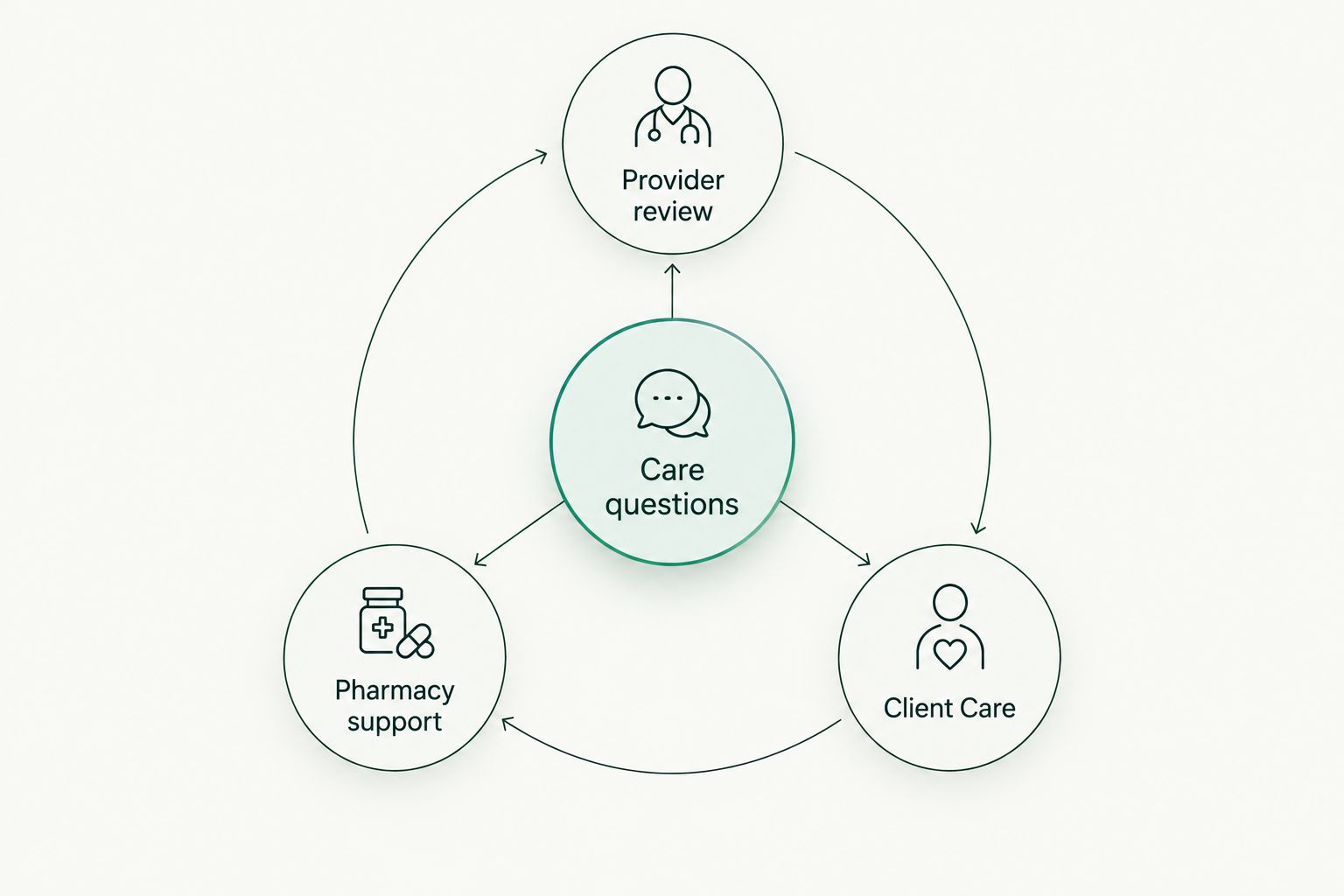
A licensed provider reviews your intake and decides whether a prescription is appropriate; submitting information doesn't guarantee approval. Here's what happens after you start treatment online, from provider review to delivery and follow-up.
Keep the roles straight so questions land in the right place. Your provider makes prescribing decisions. A MintRx pharmacist can help with medication questions, interactions and side effects, before you start or after your medicine arrives. Client Care handles orders and account questions. This guide explains when to call the MintRx pharmacy team.
How long does hair loss treatment take to work?
Give it time. The AAD says you'll need to use minoxidil continuously for about six to 12 months to know how well it works, and prescription medicines for female pattern hair loss need a similar 6 to 12 months. In the first two to eight weeks of minoxidil, a temporary increase in shedding can happen. Ask your provider when to check in and what would prompt an earlier review.
Photographs taken under similar lighting and with the same part can make follow-up discussions more useful. Hair length, styling, and lighting can otherwise make comparisons difficult.
Do not increase an amount, combine treatments, or switch formulations because progress feels slow. The next step is reassessment with your provider, not self-directed escalation.
When is an in-person appointment more appropriate?
Sudden, patchy, painful, or inflamed hair loss needs assessment before routine treatment selection. AAD diagnostic guidance explains that a dermatologist can examine the scalp and use testing, including a scalp biopsy when needed, to identify the cause.
Online care cannot perform a hands-on examination or collect a biopsy. An in-person recommendation is therefore a useful clinical outcome, not a failed online visit.
If a prescribed medicine is followed by chest pain, trouble breathing, or fainting, seek urgent medical care rather than waiting for a routine message response. Contact the prescribing team about other new symptoms and ask how to proceed.
FAQ
Can I get prescription hair loss treatment online as a woman?
Yes, women can get prescription hair loss treatment online when a licensed provider finds it appropriate. The assessment can also result in a recommendation for testing or an in-person scalp examination rather than a prescription.
What is the best hair loss treatment for women?
The best treatment depends on the cause of the hair loss and your health history. AAD guidance identifies topical minoxidil as an established option for female pattern hair loss, while other treatments require an individualized discussion of benefits and risks.
Can women use finasteride for hair loss?
Yes, in the right situation. Finasteride isn't FDA-approved for women and must never be used during pregnancy or by anyone who could become pregnant. For women who can no longer become pregnant and aren't trying to conceive, a provider may prescribe finasteride tablets or RegrowPro foam.
Is oral minoxidil FDA-approved for women's hair loss?
No, oral minoxidil is not FDA-approved for women's hair loss; prescribing it for that purpose is off-label. Its systemic risks and FDA boxed warning make provider assessment essential.
Do women need a prescription for topical minoxidil?
No, topical minoxidil products labeled for women are available without a prescription. Product-specific instructions and warnings still apply, and unexplained hair loss needs evaluation.
How long should I wait to judge minoxidil results?
Six to twelve months is the timeframe AAD guidance gives for assessing minoxidil results. Follow the review schedule your provider recommends, and report concerning symptoms without waiting for that timeframe.
Can I use hair loss medicine while pregnant or breastfeeding?
Do not assume a hair loss medicine is appropriate during pregnancy or breastfeeding. Tell your provider about pregnancy, breastfeeding, or plans to conceive before treatment selection because the risks differ by medicine and formulation.
Can a hair supplement replace prescription treatment?
No. The AAD says supplements such as biotin have shown mixed results, and iron, zinc or biotin are best taken when a blood test shows you're low. A supplement doesn't replace finding the cause.
Who answers medication questions after an online prescription?
A pharmacist can answer medication questions, while the prescribing provider makes treatment decisions. MintRx offers direct pharmacist access and ongoing pharmacy support; Client Care handles account and order questions.
One last thing
A supplement can also affect your evaluation. Biotin, common in hair, skin and nail supplements, can interfere with certain lab tests, so tell your provider and the lab about everything you take before any blood work. Ask how long to stop it for that specific test rather than guessing.
When you're ready, look at MintRx's hair-loss options, bring a clear account of what has changed and when, and ask the questions that matter to you. That's a better start than picking a medicine first.
Sources
- American Academy of Dermatology: Female pattern hair loss
- American Academy of Dermatology: Hair loss diagnosis and treatment
- DailyMed: Women's Rogaine 5% foam Drug Facts
- DailyMed: Minoxidil tablets prescribing information
- Vañó-Galván and colleagues: Safety of low-dose oral minoxidil for hair loss, Journal of the American Academy of Dermatology, 2021
- DailyMed: Propecia prescribing information
- FDA: Compounded topical finasteride safety alert, April 22, 2025
- FDA: Biotin interference with lab tests

