

NAD+ injections vs. nasal spray: Which fits your routine?
Compare the needle-free NAD+ spray with the under-the-skin injection: how you use and store each, what studies measured, and what to ask your pharmacist.
If needles are the reason you're hesitating, the NAD+ nasal spray gives you a way to leave them out of your routine. If your nose is often sore or congested, the injection is worth asking about: it goes just under the skin and leaves your nose out of the picture. The clearest difference is what you'll do at home. We don't have a good head-to-head study showing which works better for how you want to feel.
Reviewer: Nathan Parker, PharmD.
What matters most to you about the spray?
With the NAD+ Nasal Spray, you have one metered pump bottle rather than a vial, syringes and a sharps container. That's a real difference if you travel often or know you'd keep putting off a shot. After delivery, this spray is stored at room temperature, away from heat and sunlight. Follow the date on your pharmacy label and keep the bottle from freezing.
Ask your pharmacist how to prime the pump before the first dose and how to prime it again if it's been sitting unused. Priming gets the pump ready to deliver a full spray. If the pump sputters and you're unsure what went in, call before adding another spray.
Tell your prescriber if you've recently had nasal surgery or you get frequent nosebleeds. A spray can sting or dry out your nose. If it keeps bothering you, describe what happens when you use it. If bleeding persists, stop using the spray and seek medical care.
What would the injection add to your day?
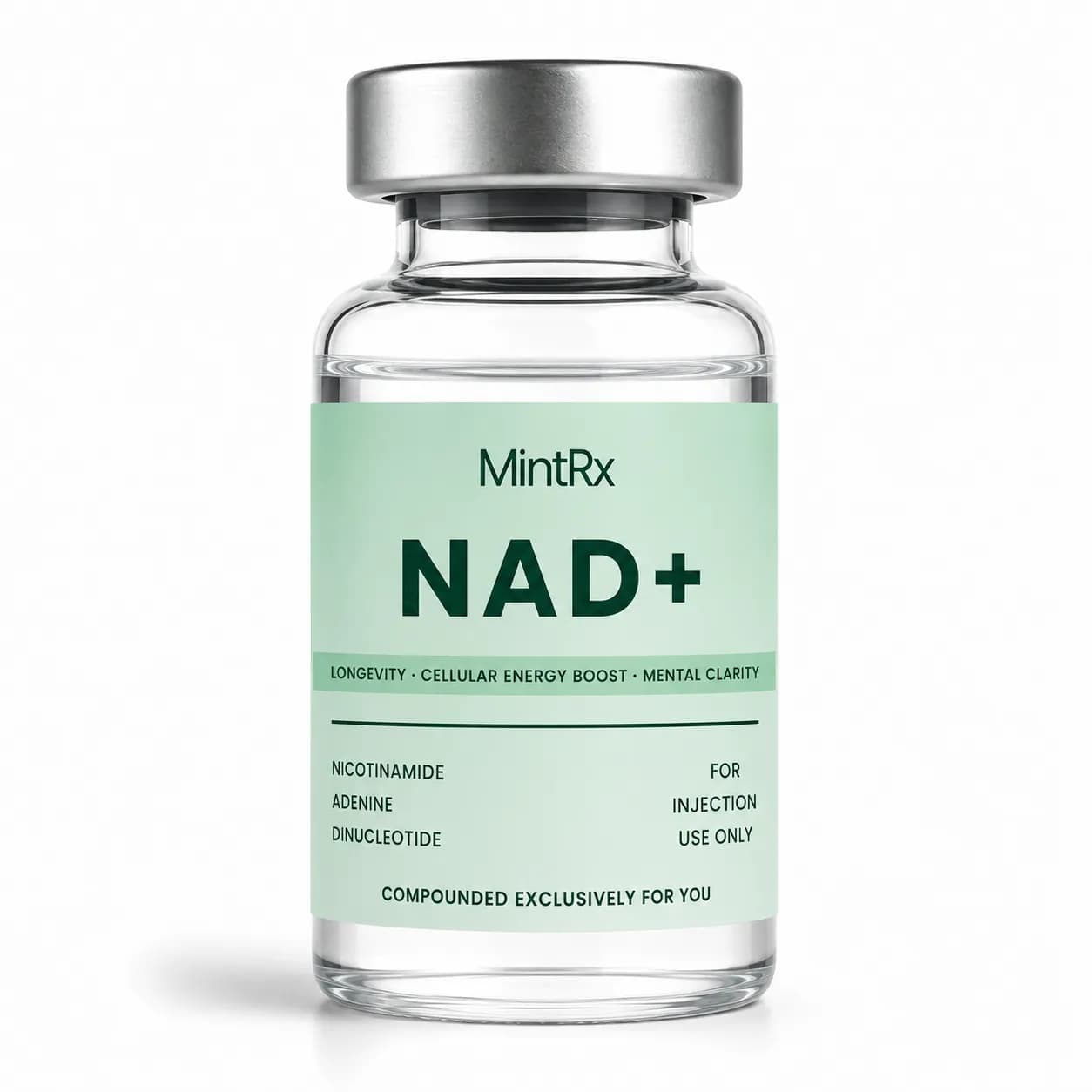
The NAD+ Injection comes pre-mixed in a 10 mL vial. There's nothing to mix at home. This prescription goes under the skin, not into a muscle or a vein. The vial is labeled in milligrams per milliliter, but the supplied syringe has unit markings. Before the first shot, have the vial, syringe and illustrated instruction sheet in front of you and ask your pharmacist, “Which line is my prescribed amount?”
Set aside space in the fridge for the vial. Keep it in its carton away from light and never freeze it. Write the date on the vial when you first puncture it. Discard it 28 days after that, or on the pharmacy's labeled use-by date if that's sooner, even if there's medication left.
Rotate injection sites and use a new sterile syringe each time. Keep a sharps container within reach so the used needle goes straight in; this guide to disposing of used needles explains what to do with the container when it's ready for disposal. A little soreness at the site can happen. If the pain or swelling persists or becomes severe, stop and contact your prescriber.
Does one form work better?
NAD+ is a molecule your cells use to turn nutrients into energy. That's why researchers study it. The question for you is whether taking more changes something you notice in daily life. Look at what people actually received:
- A nasal spray: In one registered human study, participants were assigned the spray together with other treatments, including metformin and B12. That design can't tell you what the spray does on its own.
- An under-the-skin injection: A preliminary injection safety study included six people in the group assigned NAD+ under the skin. The researchers looked at how people tolerated injections. The report is a preprint, not a peer-reviewed comparison with a spray.
- An IV drip: A small IV infusion study tracked NAD+ and related molecules in blood and urine during and after a six-hour infusion. It didn't test either of these home prescriptions or whether people felt better using them.
An amount absorbed and a benefit experienced are different questions. If someone says a shot is “stronger,” ask, “Stronger at doing what, and did the study measure that?” Our guide to reading NAD+ injection evidence walks through those questions.
Related treatment
NAD+ Injection
See pricing and how it worksBefore you choose either one
Tell your provider what brought you here. “I've started needing a nap to get through my usual workday” is more useful than “I want NAD+.” New or persistent tiredness deserves an evaluation of its own. If low B12 is part of the discussion, this comparison of B12, NAD+ and glutathione injections explains why treating a deficiency is a different decision from trying NAD+.
Bring your medication and supplement list and mention any ingredient allergies. Neither MintRx product is used during pregnancy or breastfeeding or if you're allergic to one of its ingredients. The injection also isn't used with active cancer. If you're receiving cancer treatment, involve your oncology team before considering a nasal spray. With either form, trouble breathing or swelling of your face or throat means get emergency help now.
Choose a licensed pharmacy that fills a prescription written for you, labels it with your directions and gives you a pharmacist to call. A vial marked “research use only” isn't a substitute. An ingredient-quality notice about injectable NAD+ explains why food-grade material used in some IV preparations raised concerns. That's a reason to check the source of an injection, not a finding about this particular vial.
If you and your prescriber decide to try a form, agree on what would make it worth continuing and when you'll check back. Write down how often your original concern gets in the way now. At follow-up, bring that note, how often you actually used the prescription, and anything that made using it difficult. A pump that sputters and a goal that hasn't changed need different conversations.
Common questions
Which NAD+ format is easier to travel with?
The spray has fewer pieces to pack and is stored at room temperature after delivery. Keep it away from heat, including a parked car. The vial needs refrigeration, injection supplies and a plan for used needles. If you won't have reliable cold storage, talk through your trip with your pharmacist before you leave.
Can I switch from shots to a nasal spray?
Bring your current label to your prescriber and say why you want to switch. If it's the needles, the spray addresses that directly. If you're not noticing the change you hoped for, revisit the reason for treatment first. A syringe marking isn't a number of sprays. Use the new product only with directions written for it, not a conversion from the old prescription.
Who can help me use the device I received?
You can book a pharmacist call and have your bottle or vial and supplies handy. Ask about priming, the marking on your syringe, or anything that looks different from the instructions. If you're still considering your options, the MintRx longevity treatment guide shows both prescription formats side by side.
Sources
- ClinicalTrials.gov: combination study that includes NAD+ nasal spray
- Preliminary safety analysis of injection studies, including a small NAD+ group (preprint)
- Grant and colleagues: NAD+ and related molecules during an IV infusion
- FDA: ingredients suitable for sterile compounding
- FDA: disposal of used needles and other sharps
Related treatment
NAD+ Injection
See pricing and how it worksRelated treatment
NAD+ Nasal Spray
See pricing and how it worksKeep reading
Need help with your next step?
Start with Client Care. We can help with account and order questions or route you to the right clinical or pharmacy resource.