Longevity
Best longevity injections compared: NAD, B12, and glutathione
B12, NAD+ and glutathione do different jobs. What each can help with, what the research shows and how to choose a trusted, pharmacy-prepared injection.

B12, NAD+ and glutathione get grouped together as longevity shots, but they do very different jobs. B12 has a clear medical role: if you're low, correcting it can make a real difference in energy, blood counts and nerve health. NAD+ and glutathione are wellness options with interesting biology and early human research, and they can be worth trying with a clear goal and honest expectations.
So the first question isn't which injection is best. It's what you want to feel different, and whether something specific, like low B12, might be part of the reason.
Reviewer: Nathan Parker, PharmD.
NAD+, B12 and glutathione at a glance
| B12 | NAD+ injection | Glutathione injection | |
|---|---|---|---|
| May help with | Correcting a deficiency that can cause tiredness, anemia or nerve symptoms | Energy and focus goals | Antioxidant support; some ask about skin tone |
| Human evidence | Well established for deficiency; no energy boost if B12 is already adequate | Small, short studies, mostly of blood levels | Mostly oral, topical or IV studies |
| Product | Cyanocobalamin: manufactured generic, into the muscle. Methylcobalamin: compounded, usually under the skin | Compounded, pre-mixed, under the skin only | Compounded, into the muscle only |
| Handling | Cyanocobalamin at room temperature; methylcobalamin refrigerated after arrival | Ships cold; refrigerate; 28-day discard after first puncture | Ships cold; refrigerate; 28-day discard after first puncture |
B12: the one with a clear medical job
B12 helps make red blood cells, keeps nerves working and supports DNA production, as the NIH Office of Dietary Supplements explains. If yours is low, replacing it is real treatment. If it's already fine, more doesn't seem to add energy. Our guide on testing before B12 injections explains what results can tell you.
A shot isn't automatically better than a pill. A Cochrane review found low-quality evidence that high-dose oral B12 normalized blood levels about as well as injections, though its small trials didn't measure symptoms. NICE guidance favors injections when absorption is the problem, such as pernicious anemia or some stomach surgeries, and oral treatment more often when diet is the cause.
MintRx's Vitamin B12 Injection is manufactured cyanocobalamin, 1,000 mcg/mL in a 10 mL vial, an FDA-approved generic. The Methylcobalamin B12 Injection is a compounded, more concentrated methyl form. Both are legitimate B12; choose by your history and plan, not by which sounds more advanced. The same syringe marking holds a different dose in each, so follow your own label if you switch.
Tell your prescriber if you have Leber's disease, a rare inherited eye condition the cyanocobalamin label calls out. If you have pernicious anemia, B12 is lifelong, so keep it going unless your prescriber changes the plan. New numbness, balance problems or trouble walking deserve a prompt check.
NAD+: interesting biology, early human evidence
NAD+ is a coenzyme every cell uses to turn food into energy, which is why aging research pays it so much attention. Research on injecting it is still early, so the best approach is a defined trial with a goal you can feel.
Most human research so far has used oral precursors such as NR and NMN, and results on things like muscle strength have been mixed in older adults. Studies of NAD+ itself, like this IV NAD+ pilot, mostly track blood levels for now, and an IV drip is a different route from an at-home injection. Our guide to NAD+ injection evidence goes deeper.
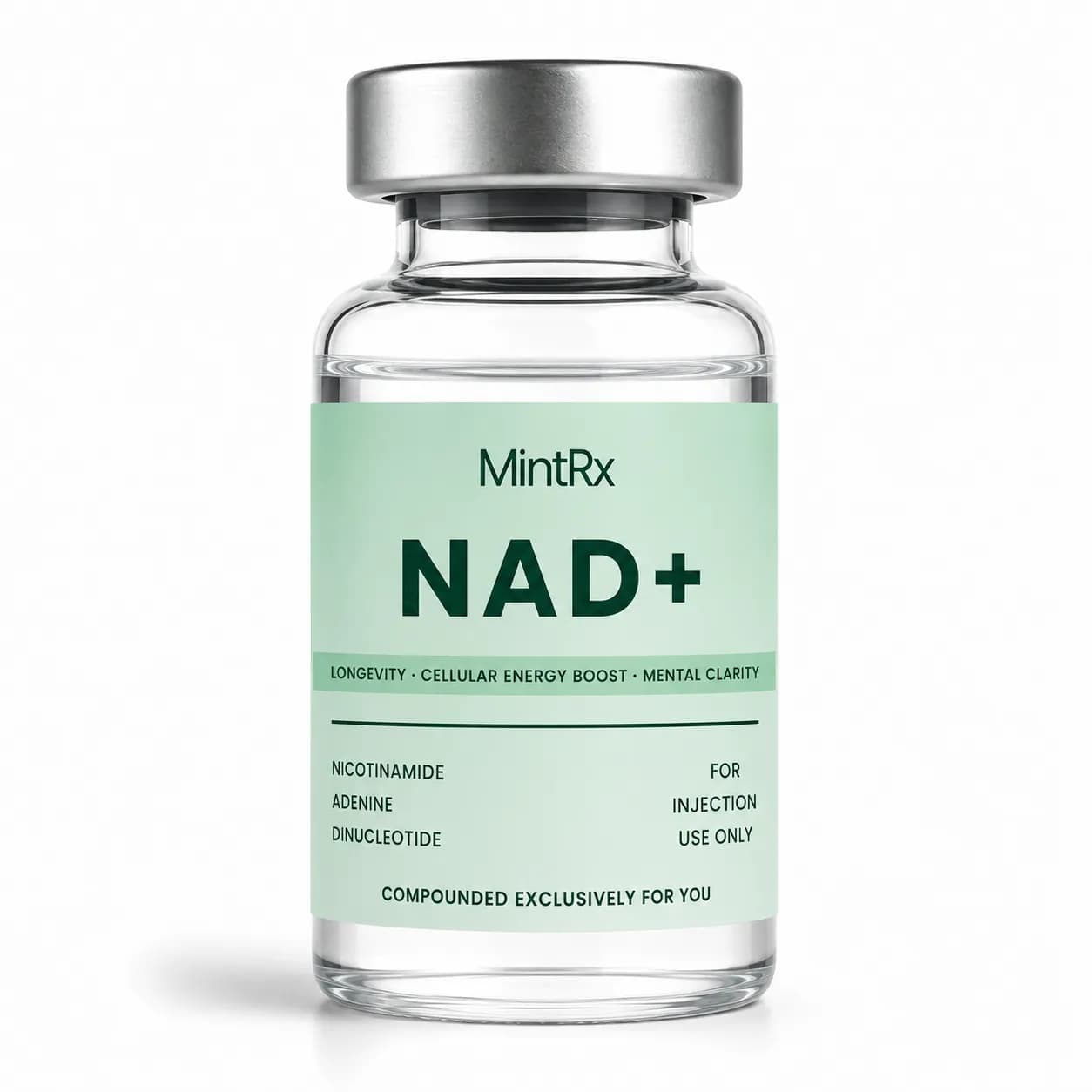
If you want to try it, pick one goal and a time to reassess, and decide ahead what 'worth it' looks like. MintRx's NAD+ Injection is a compounded, pre-mixed 100 mg/mL vial for under-the-skin use only. Its insulin syringes are marked in units, so have the pharmacist confirm what your prescribed amount looks like before your first dose. Side effects are usually mild and can be dose-related: injection-site soreness, nausea, headache, flushing, lightheadedness or brief tiredness. It isn't used in pregnancy, breastfeeding or active cancer.
Glutathione: antioxidant support
Glutathione is an antioxidant your body makes. Most human research has used pills, creams, IV or inhaled glutathione, not injections into the muscle.
A systematic review on skin tone found oral and topical glutathione modestly lowered a melanin measure. Research on injections into the muscle is still limited, so it's a good fit if you want to try antioxidant support with a clear goal and a check-in point.
If antioxidant support is part of your healthy-aging plan, glutathione is a reasonable thing to try with a clear goal. MintRx's Glutathione Injection is reduced L-glutathione 200 mg/mL in a 30 mL multi-dose vial, for intramuscular use at home only, never IV. Possible effects include soreness or bruising, flushing, cramping, bloating or loose stools. Mention asthma or past wheezing, since inhaled glutathione has tightened airways in some people with asthma. Mention cancer treatment too, since glutathione may interfere with some chemotherapy. Our glutathione injection checklist covers what to confirm.
Why the source of your injection matters
NAD+, glutathione and methylcobalamin injections are prepared by a licensed pharmacy for your prescription; cyanocobalamin is a manufactured generic. For anything you inject, the quality of the starting ingredient and how carefully it's prepared matter as much as the molecule itself. FDA has warned compounders not to use supplement-grade glutathione after reactions in IV patients, and has reminded compounders to use ingredients suitable for sterile products after reports involving injectable NAD+. That's the real difference between a pharmaceutical-grade injection from a licensed pharmacy, with a pharmacist you can call, and wellness vials sold online without a prescription. Being smart about it is simple: ask who made it, check that the label has your name and directions, and make sure there's a pharmacist you can call.
What arrives, and how to keep it
Most MintRx prescriptions ship within 24 hours of the pharmacy receiving them, and availability varies by state. NAD+ and glutathione injections ship overnight with a cold pack, going out Mondays for Tuesday delivery. Refrigerate the vial on arrival, keep it in its carton away from light and never freeze it. Write the first-puncture date on the label; the vial is discarded 28 days later even if medicine is left, so ask the pharmacist how your schedule fits that window. Don't use a cloudy or discolored vial, and if a shipment arrives warm or damaged, contact the pharmacy before using it.
Traveling? Use an insulated bag and cold pack, keep the vial from touching the pack so it can't freeze, keep it with you rather than in checked luggage or a hot car, and refrigerate it when you arrive.
Cyanocobalamin is stored at room temperature away from light. Methylcobalamin is refrigerated after arrival and kept from light. Follow the dates on your label.
Which one makes sense for you?
- Tired and not sure why? Start with evaluation. Low B12 is one possible cause, and the one with a clear fix if it's found.
- Already diagnosed with low B12? The question is route and form. Bring your labs and current label.
- Curious about NAD+ or glutathione? Choose one goal and a reassessment point. Starting several at once makes it hard to tell what's working.
- Focused on sleep, recovery or body composition? That's a different conversation; see questions to ask before sermorelin.
A licensed provider reviews your history to build the right plan. Once you have it, a MintRx pharmacist can help with the label, syringes, storage and what to report. Injection orders come with an illustrated instruction sheet, and you can book a pharmacist consult for one-on-one help with injection technique. Follow your label, and don't combine injections without your prescriber. Trouble breathing, wheezing, face or throat swelling, chest pain or fainting after an injection is an emergency: call 911.
FAQ
What's the best longevity injection: NAD+, B12 or glutathione?
It depends on your goal. B12 has the clearest job, treating a deficiency. NAD+ and glutathione are worth discussing for energy or antioxidant goals, with a clear plan to check how you feel.
Will B12 injections give me more energy if my B12 is normal?
Usually not, if your level is already adequate. Persistent tiredness is worth looking into, and B12 testing is a good place to start.
Is an at-home NAD+ injection the same as an NAD+ IV drip?
They're different routes. MintRx's NAD+ injection goes under the skin at home, so IV-clinic results don't carry over directly.
Can I use NAD+, B12 and glutathione together?
Talk with your prescriber first. Starting one at a time makes it easier to tell what's helping and what's causing a side effect.
One last thing
The useful distinction isn't vitamin versus coenzyme versus antioxidant. It's replacing something you're short on versus adding something in hopes of feeling better. Both can be reasonable; knowing which one you're choosing keeps expectations honest.
Questions about a label, syringe or storage? Talk with a MintRx pharmacist, or compare all longevity treatments.


