


Sexual Health
Who should discuss PT-141 nasal spray risks with a provider?
Considering PT-141 nasal spray? Discuss risks with a provider first. Understand formulation limits, health concerns, and what to ask before treatment.

Anyone considering PT-141 nasal spray should talk with a licensed provider before starting. Share your health history, medicines, and what you would like help with, including any blood pressure or heart concerns, pregnancy plans, or breastfeeding. Your provider can review whether the treatment fits your situation, and a MintRx pharmacist can answer questions about your prescription.
By Nathan Parker, PharmD.
Clinically reviewed by Nathan Parker, PharmD. Last reviewed: November 4, 2026.
TL;DR
- Share your health history, medicines, and treatment goals with your provider.
- Mention blood pressure or heart conditions, pregnancy plans, and breastfeeding.
- PT-141 nasal spray is compounded and is not FDA-approved; approval of the injection does not extend to the spray.
- A MintRx pharmacist can help with your label, storage, and medication questions.
Why this matters
When you explore PT-141 nasal spray, your health history and treatment goals help your provider assess whether it fits your situation. A MintRx pharmacist can help you understand your prescription and answer medication questions.
What to share with your provider
Everyone considering PT-141 nasal spray should talk with a provider, including people without a diagnosed condition. Use this table to prepare for the conversation.
| What to discuss | Why it belongs in the review | What to bring |
|---|---|---|
| High blood pressure or heart disease | FDA labeling for injected bremelanotide includes cardiovascular restrictions; nasal safety cannot be assumed | Diagnoses, recent readings if available, and heart medicines |
| Pregnancy, pregnancy plans, or breastfeeding | Reproductive safety needs an individual assessment; nasal use is not covered by the injection's approval | Pregnancy possibility, plans, and feeding status |
| Prescription medicines and supplements | The provider needs to assess interactions and uncertainties for the exact formulation | A complete list, including occasional medicines |
| Previous medication reactions | Past reactions can affect treatment selection and follow-up | The medicine, reaction, and timing |
| New or changing sexual symptoms | Low desire, erection difficulty, pain, and other concerns need different assessments | What changed, when, and how it affects you |
| Expectations about nasal treatment | Evidence from an injection does not establish nasal effectiveness or predict an individual's response | The exact product name and your questions |
This table is a conversation guide, not a way to decide on treatment yourself. Your provider can help you understand what these details mean for your care.
Why the formulation matters
PT-141 nasal spray and injectable bremelanotide are different formulations. Vyleesi is an FDA-approved injection for a specific type of low sexual desire in premenopausal women. That approval does not extend to the compounded nasal spray, and the two should not be treated as interchangeable. Your provider can explain the reasons for recommending a particular formulation.
Why individual risk varies
Your provider considers your health history, medicines, and the exact preparation when reviewing treatment.
- Blood pressure and heart health: Injected bremelanotide can temporarily increase blood pressure and reduce heart rate. Its FDA labeling says it must not be used in people with uncontrolled high blood pressure or known cardiovascular disease. Share these concerns before considering PT-141 nasal spray.
- Other medicines: The approved injection slows stomach emptying and can affect absorption of oral medicines. Tell your provider about all medicines and supplements so they can review potential interactions for your prescription.
- Pregnancy and breastfeeding: The injection's labeling includes pregnancy precautions. Tell your provider if you are pregnant, planning pregnancy, or breastfeeding so they can assess your situation.
- Your symptoms and preparation: Changes in desire can have medical, medication-related, psychological, or relationship contributors. Your symptoms and the exact formulation help guide the assessment.
Side effects and when to get help
FDA labeling for injected bremelanotide describes nausea, flushing, injection-site reactions, headache, vomiting, and darkening of areas of skin that did not always resolve after treatment stopped. These findings do not establish how often side effects occur with nasal spray. Ask your provider what is known about your prescribed preparation and what to do if symptoms occur.
Chest pain, severe trouble breathing, or signs of a stroke require emergency medical attention. Do not wait for an online message response.
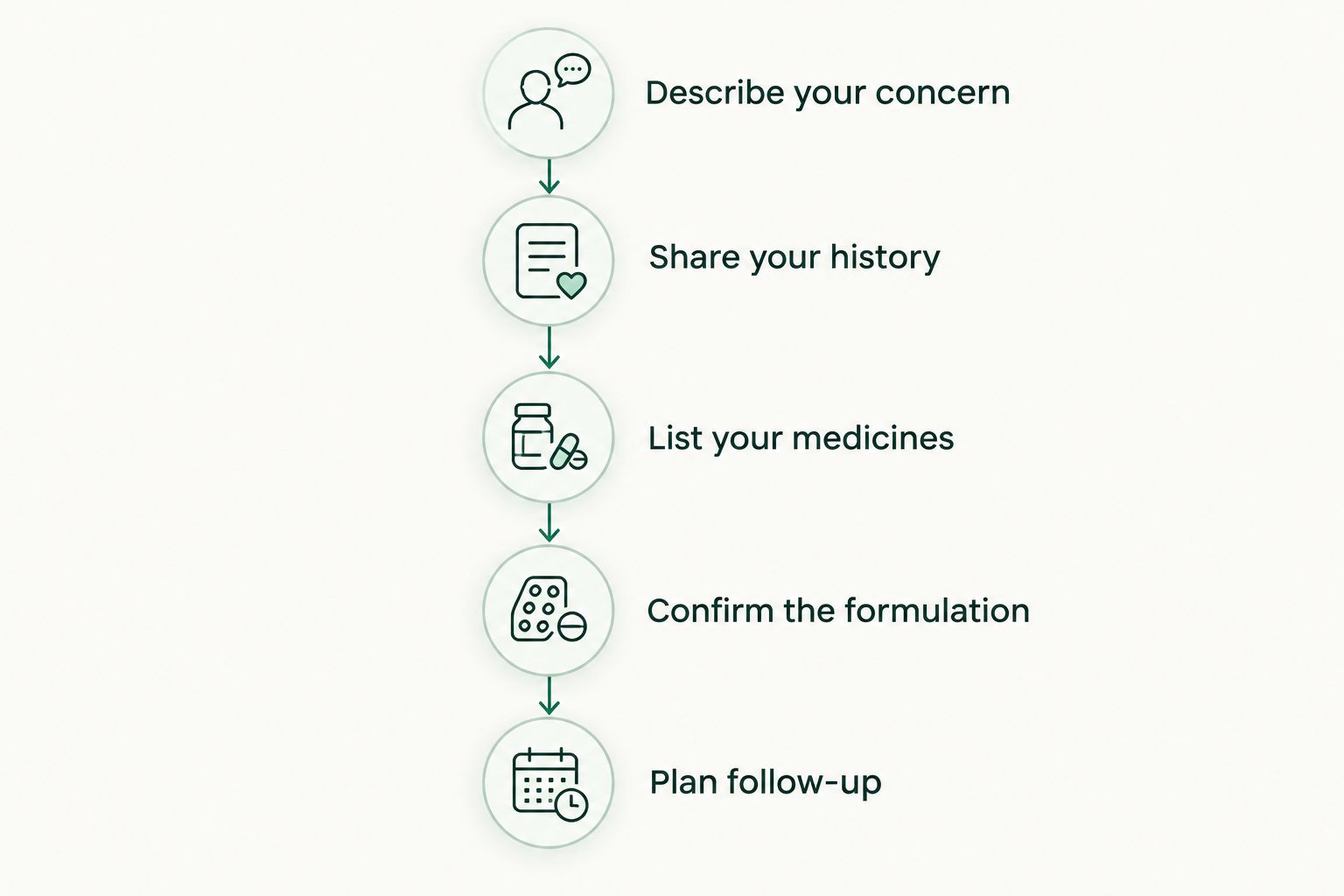
Your appointment checklist
You do not need a polished explanation of your sexual-health concern. A short, accurate account gives the provider a useful starting point.
- Describe your concern. Explain whether you are noticing changes in desire, arousal, erections, comfort, or another aspect of sexual function. Include when the change began and whether it causes distress.
- Share your history. Include blood pressure concerns, cardiovascular conditions, pregnancy or breastfeeding circumstances, and previous reactions to medicines. Mention current care from other clinicians.
- List your medicines. Include prescriptions, over-the-counter products, supplements, and medicines taken only occasionally. Include other sexual-health treatments.
- Confirm the formulation. Ask the provider to identify the exact preparation being considered and explain its evidence, risks, and limitations. Do not use instructions from a different route or product.
- Plan follow-up. Ask how the provider will evaluate benefit, what should trigger reassessment, and whom to contact with questions after dispensing.
Before you start, make sure you understand how to use your prescription, what to expect, and whom to contact if you have a question.
What happens during online treatment review?
At MintRx, a licensed provider reviews your health information and decides whether a prescription is appropriate. If treatment is prescribed, follow the directions on your label. A MintRx pharmacist can explain how to use and store your medicine and help with questions before and after delivery.
What should you ask before accepting a prescription?
Ask the provider to explain the expected benefit in terms that match your concern. A discussion about desire should not become a promise about erections or overall sexual performance.
You can also ask about alternatives. Depending on the assessment, these can include addressing a contributing condition, reviewing a current medicine with its prescriber, or considering another approach to care.
FAQ
Should everyone talk to a provider before using PT-141 nasal spray?
Yes. Talk with a licensed provider about your health history, medicines, and treatment goals before starting PT-141 nasal spray.
Is PT-141 nasal spray FDA-approved?
PT-141 nasal spray is compounded and is not FDA-approved. FDA approval of Vyleesi applies to the injection, not the nasal spray.
Can I consider PT-141 nasal spray if I have high blood pressure?
Discuss high blood pressure with your provider before considering PT-141 nasal spray. The approved injection must not be used in people with uncontrolled high blood pressure or known cardiovascular disease; nasal safety cannot be assumed.
Is PT-141 nasal spray safer than an injection?
Avoiding a needle does not establish that PT-141 nasal spray is safer than an injection. Your provider can explain what is known about the exact formulation being considered.
Should I mention medicines I only take occasionally?
Yes. Include occasional prescriptions, over-the-counter medicines, supplements, and other sexual-health treatments so your provider can assess potential interactions.
What should I share about pregnancy or breastfeeding?
Tell your provider if you are pregnant, planning pregnancy, or breastfeeding before starting treatment. Your provider can assess these circumstances when reviewing your options.
Who can answer medication questions after delivery?
A MintRx pharmacist can help with your prescription label, how to use and store your medicine, and medication questions before and after delivery.
A useful conversation starts with what you are experiencing and what you would like to improve. Share your history, ask your questions, and leave with a plan you understand. Your provider and pharmacist can help you take the next step.

